Realistic Recycled Plastic Furniture: How it’s Made & Why South Africans Love it
At first glance, it looks like a solid wooden park bench or a sleek stone-effect garden table. But if you look a little closer, you might be surprised to learn it’s made entirely from recycled plastic! Over the last decade, the recycled plastic furniture industry has made extraordinary leaps in manufacturing technology, to the point where it becomes quite difficult to tell the difference between the real thing and its eco-friendly plastic counterpart.
So how do we at Unique Timber Plastics achieve this look? And what are the benefits that attract South African home-owners, school principles, municipality officials and business investors?
The Process Behind Creating Realistic Recycled Plastic Furniture & Equipment
1. Using the Right Material
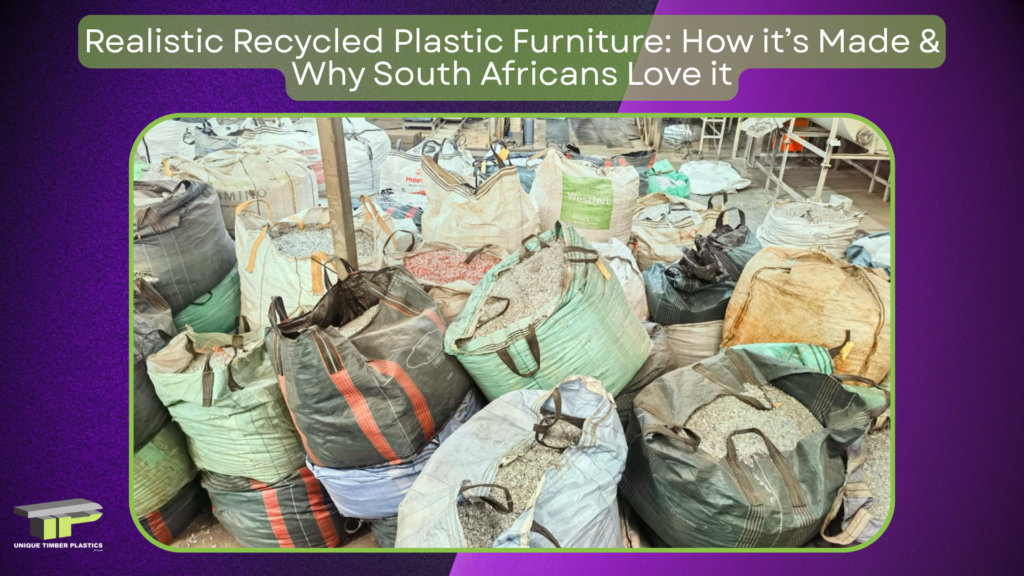
High-Density Polyethylene (HDPE), Low-Density Polyethylene (LDPE), and Polypropylene (PP). This is the foundation of most high-quality recycled plastic furniture. Sourced largely from post-consumer waste such as milk jugs, detergent bottles, and plastic piping, this waste is melted down, cleaned, and then reformed into dense boards or profiles. What makes this material particularly special is its natural ability to be easily pigmented, textured, and shaped during the manufacturing process. This makes HDPE, LDPE, and PP the ideal candidates for mimicking the appearance of naturally occurring materials like wood and stone.
2. Solid Colour-Through Pigmentation for a Naturally Authentic Look
One of the most impressive aspects of Unique Timber Plastics’ manufacturing process is the use of solid colour-through pigmentation, where consistent, rich colour is blended directly into the HDPE, LDPE, and PP material during extrusion. This means the colour runs through the full depth of the material and not just on the surface, resulting in a finish that remains true-to-colour even through years of heavy use and outdoor exposure. With an extensive colour range available, clients can select the perfect shade to complement their environment, whether replicating the warm tones of natural timber or the cool, neutral tones of stone.
3. Surface Embossing and Texturing
Colour alone isn’t enough to mimic these natural looks, texture is what truly sells the illusion of organic materials. After extrusion, the material passes through embossing rollers that press detailed grain or stone patterns directly into the recycled plastic material’s surface. The result is an extremely tactile finish that feels remarkably similar to real wood or stone all around. This step is where our craftsmanship really shows, as the depth and consistency of the embossing determines how convincing the final product looks in real-world conditions.
4. UV Stabilisation for Long-Term Colour Retention
A common concern with plastic products is colour fading due to constant weather exposure. Nobody wants their furniture to look washed out after a long season in the sun. To combat this, Unique Timber Plastics uses UV stabilised plastic waste in the recycling process. These additives protect the pigments from breaking down under prolonged sun exposure, meaning the wood or stone effect stays as vibrant as the day it was made and true-to-form for years, even in the harshest South African weather conditions.
5. Zero Maintenance, Maximum Longevity
Beyond aesthetics, one of the most compelling benefits of our recycled plastic furniture is its near-zero maintenance requirement. Unlike real wood, it does not sanding, sealing, painting, or staining, and unlike metal, it will never rust, splinter, crack, or harbour bacteria. This makes it particularly well-suited for public spaces such as schools, hospitals, and public spaces. The material is also impervious to moisture, insects, and rot, which gives it a functional lifespan that far outlasts their traditional alternatives.
How South Africans Implement Realistic Recycled Plastic Furniture into Our Everyday Lives
Schools across South Africa have been among the earliest adopters of recycled plastic furniture, particularly for outdoor jungle gyms, benches, and picnic tables that students and staff use every day. The wood-effect finish gives these installations a warm, natural appearance that fits in with outdoor environments, while the underlying material is fully capable of handling the common heavy daily usage of hundreds of children without so much as a scratch.
In the hospitality industry, game lodges and outdoor resorts have turned to stone-effect and wood-effect recycled plastic decking and seating as their go-to practical alternative to natural timber, which is prone to warping and pest damage in these usually humid or high-rainfall regions. The aesthetic fits seamlessly into natural surroundings, while maintenance teams spend far less, if any, time and money on the upkeep.
Municipalities installing park benches, boardwalks, and public seating have also embraced eco-friendly material, not only for its durability and low maintenance, but because using post-consumer recycled plastic aligns perfectly with broader sustainability and waste-reduction commitments at a civic level.
Browse our extensive catologue of realistic recycled plastic furniture to suit all of your outdoor living needs.
FAQs
Can recycled plastic furniture really pass for real wood or stone?
In most cases, yes. Especially from a distance and in outdoor settings. The combination of co-extruded colouring, embossed grain textures, and natural tone variation makes modern realistic recycled plastic furniture visually convincing to the average eye.
Is HDPE, LDPE, and PP furniture environmentally friendly?
Absolutely. HDPE, LDPE, and PP furniture is made from post-consumer plastic waste that would otherwise end up in landfills or oceans. Choosing recycled plastic furniture actively contributes to reducing the plastic pollution on our planet.
Does the wood or stone effect fade over time?
High-quality recycled plastic furniture includes UV stabilisers that protect the colour and texture from sun damage, ensuring that the finish remains consistent over many years of outdoor exposure.
Is it as strong as real wood or stone?
In many ways, it can be stronger. HDPE, LDPE, and PP doesn’t crack, splinter, warp, or rot, and it handles impact and weight exceptionally well, making it very ideal for high-traffic environments.
Unique Timber Plastics: Redefined Outdoor Comfort
If you’re considering making the switch to realistic recycled plastic furniture, whether for a school, business, home, or public space, Unique Timber Plastics offers a wide range of wood-effect HDPE, LDPE, and PP products built to last. Get in touch with our team today and let us help you find the perfect solution.
Johannesburg branch: 011 626 2487 / 078 152 3605 | enquiries@timberplastics.co.za
Cape Town branch: 079 525 0361 | capetownsales@timberplastics.co.za