

Plastic Timber for Farming in South Africa: Durable Solutions That Last
Replacing a rotting wooden gate every few seasons, lifting termite-eaten kraal poles, or scrapping a rusted steel trough after one wet season is a familiar story on South African farms. Recycled plastic timber planks from Unique Timber Plastics address the root cause of all three.
Made from 100% recycled HDPE (high-density polyethylene), plastic timber does not rot, does not rust, and termites leave it alone. The upfront price is higher than pine, but over 20 to 30 years it works out cheaper for almost every fencing, kraal, and structural application on a working farm.
The Problem with Traditional Farm Materials in South Africa
South African conditions are hard on materials. In the Lowveld and KwaZulu-Natal, humidity and insects destroy untreated timber within two to three years. In the Karoo and Northern Cape, freezing nights followed by 40-degree afternoons split wooden poles and blister painted steel. Coastal and Winelands farmers deal with salt air that rusts every steel component on the property. Free State and Eastern Cape farmers face their own mix of frost, hail, and termite pressure.
The real cost is never the purchase price alone. It is the labour to replace, the lost time during repairs, the veterinary risk when a rotted gate fails and cattle end up on a public road, and the preservative chemicals applied season after season.
Recycled plastic lumber sidesteps all of that. It contains no organic matter for fungi or bacteria to feed on. It does not absorb moisture. It does not need painting, sealing, or treatment.
| Material | Service Life | Annual Maintenance | Chemical Treatment |
| Treated pine dropper | 5-8 years | Re-treatment, replacement | CCA / creosote required |
| Galvanised steel post | 10-15 years | Repainting, rust repair | Anti-rust coating |
| Recycled plastic timber | 25-30 years | None | None |
Plastic Timber Planks for Farm Gate Construction
Unique Timber Plastics supplies the planks used in farm gate construction. We do not build or quote for completed gates, this is intentional. When planks are used in wide horizontal spans without the correct structural design, they can show the effects of sagging, warping, or swelling over time. A gate built without accounting for this can become heavier than expected, placing strain on hinges and the overall frame.
When designed and built correctly, however, plastic timber planks perform well in gate applications. The key points to understand before building:
- Planks perform best in vertical orientation. Long horizontal spans need adequate bracing and support to prevent movement.
- Gates built from plastic timber can be heavier than timber equivalents. Hinge selection and gate framing need to account for this.
- The material will not rot, rust, or splinter, and carries no risk of termite damage regardless of how the gate is framed.
If you are planning to use our planks for a gate, contact your nearest branch before ordering. We can advise on the right profiles, span limits, and structural approach for your specific application so the end result performs as expected.
Livestock Fencing, Kraal Poles, and Plastic Fence Droppers
The most common use for plastic timber on farms is livestock fencing: boundary fencing, internal camp fencing, and the close-set kraal poles used in holding pens and sorting facilities.
A treated pine dropper in a wet or termite-active region lasts five to eight years before it needs replacing. A recycled plastic dropper in the same position lasts 25 to 30 years with no maintenance. That is three or four replacement cycles avoided, plus the labour to do them.
For kraal construction, plastic kraal poles come in square and rectangular profiles strong enough to take the lateral pressure of massed livestock. The textured HDPE surface also gives stock handlers something to tie to, which smooth steel piping does not.
Plastic fence droppers and kraal poles do not leach chemicals into the soil, which matters on certified organic operations and near streams, dams, or irrigation channels.
See our full range of recycled plastic planks and poles for available profiles and load ratings relevant to livestock fencing across South Africa.
Electric Fence Posts in Plastic Timber
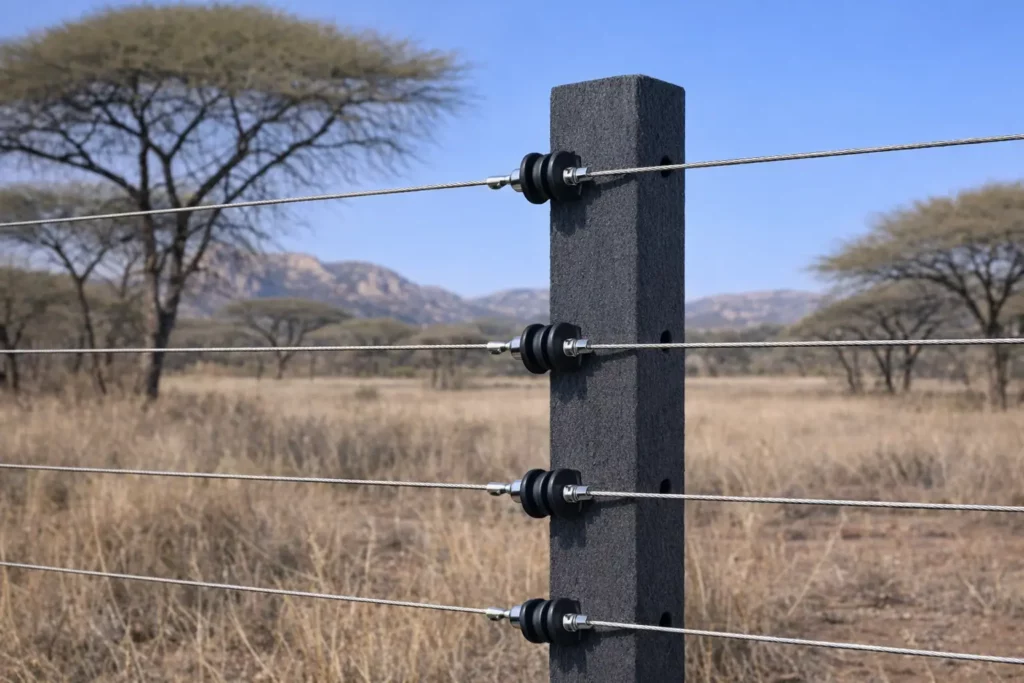
HDPE is a natural electrical insulator. Steel posts need insulators at every strand attachment point. Wooden posts become conductive when wet. A plastic timber electric fence post is non-conductive across its full surface in all weather.
For game farmers and security fencers running high-tension, multi-strand electric fencing, that means:
- Fewer separate insulators per post, cutting hardware cost on long runs
- Consistent insulation performance in rain, fog, and high humidity
- No corrosion at conductor contact points
- No moisture wicking into the post base
The recycled HDPE material is inherently UV resistant. Colour may fade slightly over many years, but structural integrity holds under sustained South African sun exposure. On open-veld game fencing where a maintenance vehicle has to travel 40 km to reach a fault, that matters.
Other Agricultural Uses for Recycled Plastic Planks
Recycled plastic planks work across a wider range of farm structures than most farmers initially consider.
Loading Ramps and Races. Livestock loading ramps built from recycled plastic planks resist the acids in urine and manure that destroy timber quickly, and carry no splinter or nail injury risk to animals. One important note: the surface can be slippery, particularly when wet. Machining a grooved profile into the plank surface improves grip significantly. For ramps used by animals, horizontal planking with spacing between boards is also an effective way to reduce slip risk.
Water Trough Surrounds. The ground around a water trough is permanently wet, chemically loaded from mineral supplements and medications, and takes constant hoof traffic. Timber rots. Steel rusts. Plastic timber kerbing and surrounds outlast both with no upkeep.
Feed Stations and Hay Racks. Hay and silage are acidic and wet. That combination destroys untreated wood fast and corrodes uncoated steel. Recycled plastic wood in feed structures does not degrade from acid contact, does not contaminate feed with preservative chemicals, and hoses down clean between uses.
Shade Structure Frames. Shade cloth frames and field shelters built from plastic timber posts and beams need no painting and no seasonal maintenance. Wind and sustained UV exposure have no meaningful effect on the structural integrity of recycled HDPE profiles.
Why SA Farmers Choose Plastic Timber for Farming
Every hour spent repairing a fence, replacing droppers, or pulling a rotted gate off its hinges is an hour off production. That is the calculation driving adoption of plastic timber for farming South Africa across operations in Gauteng, the Free State, the Eastern Cape, the Southern Cape, and the Western Cape.
The reasons farmers give for making the switch:
- No rot and no termite risk, in any region or soil type
- Rust-proof with no chemical treatment required
- Made from recycled materials, relevant for organic certification and export-market green requirements
- Consistent dimensions keep fence strands tensioned and structures aligned
- 25 to 30 years of structural service life is realistic
- The higher upfront cost is recovered by cutting out replacement and treatment cycles
Frequently Asked Questions
Can plastic timber planks be used for farm gates?
Yes, with the right structural approach. Unique Timber Plastics supplies the planks used in gate construction. Wide horizontal spans need adequate bracing and support to prevent warping, swelling, or sagging over time. Gates built from plastic timber planks can also be heavier than timber equivalents, so hinge selection matters. Contact your nearest branch before building and we can advise on the right profiles and structural design for your gate span and load.
How does plastic timber handle chemical exposure on farms?
HDPE is chemically inert and resistant to the acids in manure, silage, and most agricultural disinfectants. It will not degrade, stain permanently, or absorb contaminants, making it safe for feed stations, dip races, and wash-down areas.
Will plastic timber hold up in the South African sun?
The recycled HDPE material is inherently UV resistant. Colour may fade slightly over many years but structural integrity is not affected by UV exposure under South African conditions.
Can plastic timber be used for electric fencing?
Yes, and it outperforms both wood and steel for this application. HDPE is a natural electrical insulator, so the post itself is non-conductive without additional insulator fittings at every strand. That cuts installation cost and maintenance on long game fence and security fence runs.
Are plastic kraal poles and fence droppers available in standard sizes?
Yes. Unique Timber Plastics supplies square and rectangular profiles for kraal construction, standard and heavy-section dropper profiles for livestock fencing, and slimmer posts for electric fence applications. Standard and custom-cut lengths are available. Contact your nearest branch for a current stock and specification list.
Is plastic timber slippery?
It can be, particularly on flat horizontal surfaces when wet. For loading ramps and animal walkways, we recommend machining a grooved profile into the surface or laying planks horizontally with spacing between boards. Both methods improve grip significantly and reduce slip risk for livestock.
Get Plank Supply Pricing From Your Nearest Branch
Unique Timber Plastics supplies recycled plastic timber planks and poles to farmers, game farmers, agri-businesses, and smallholders across South Africa. For product specifications, volume pricing, and delivery options on fencing profiles, kraal poles, fence droppers, and structural sections, contact the branch closest to you:
- Gauteng: 011 626 2487 / 078 152 3605 | enquiries@timberplastics.co.za — serving the Highveld, North West, Limpopo, and Mpumalanga farming regions
- Cape Town: 079 525 0361 | capetownsales@timberplastics.co.za — serving the Western Cape Winelands, Overberg, and West Coast farming communities
- Southern Cape: 082 748 1192 — serving the Garden Route, Klein Karoo, and surrounding agricultural areas
Visit uniquetimberplastics.co.za to request a quote or find branch contact details.


